MUMIE Moodle integration for administrators
This article is meant for administrators of Moodle servers, who want to enable the usage of MUMIE content on their platform.
_This article applies to auth_mumie v1.9.0 / mod_mumie v1.10.0 or later (requires Moodle 4.3+, tested up to Moodle 5.2)._
Installation
You need to install two separate Moodle plugins for the MUMIE-Moodle integration to work (mod_mumie and auth_mumie). Due to restrictions
from the Moodle architecture, it's currently not possible to provide all necessary functionalities in a single plugin.
You can install both plugins directly from the MOODLE Plugin Directory.
| Step |
Description |
Example |
| 1 |
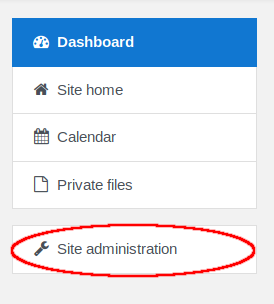
Go to Site administration. |
 |
| 2 |
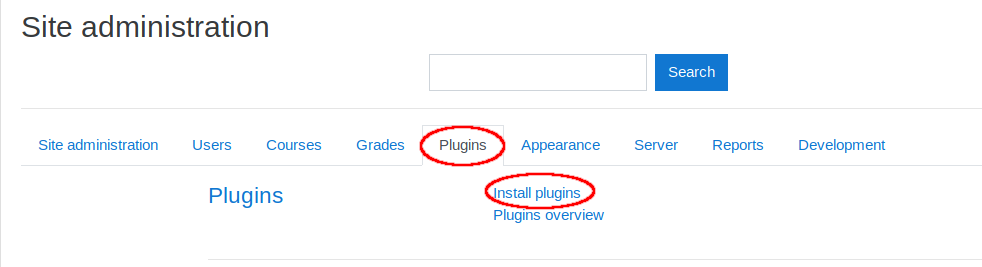
Select the Plugins tab and click on Install plugins. |
 |
| 3 |
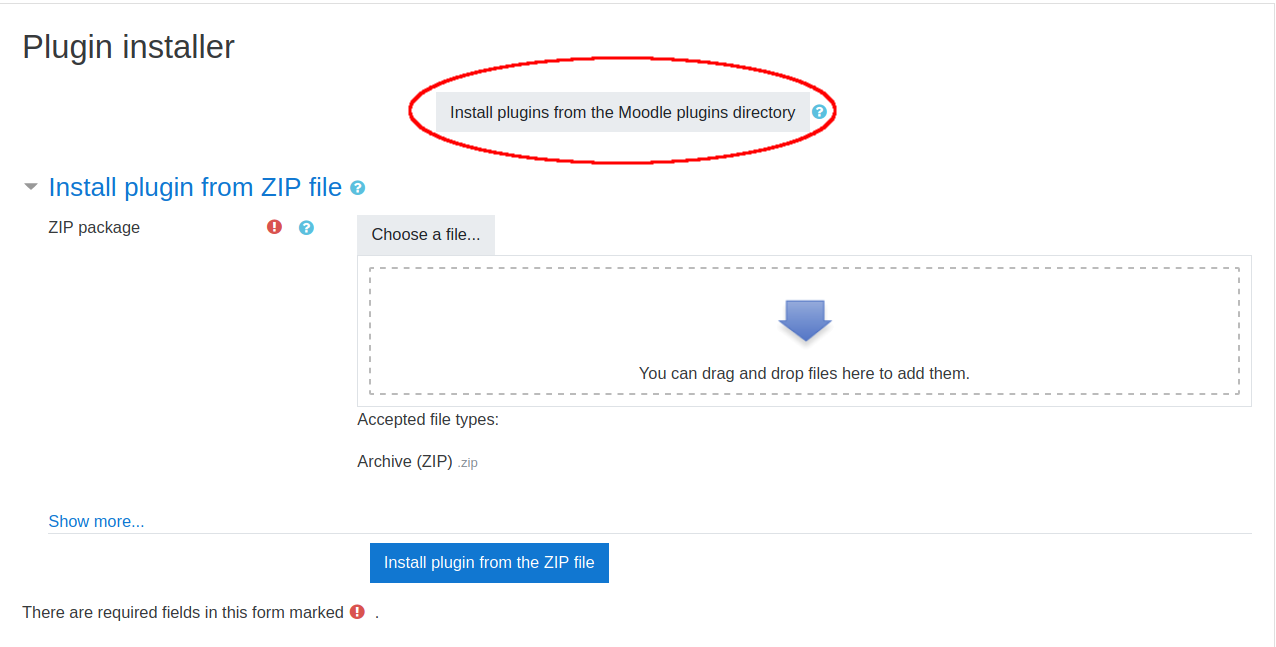
Click on Install plugins from the Moodle plugin directory and enter mumie into the search box.
Then select MUMIE Single Sign On, click on Install now and follow the displayed instructions. |
 |
| 4 |
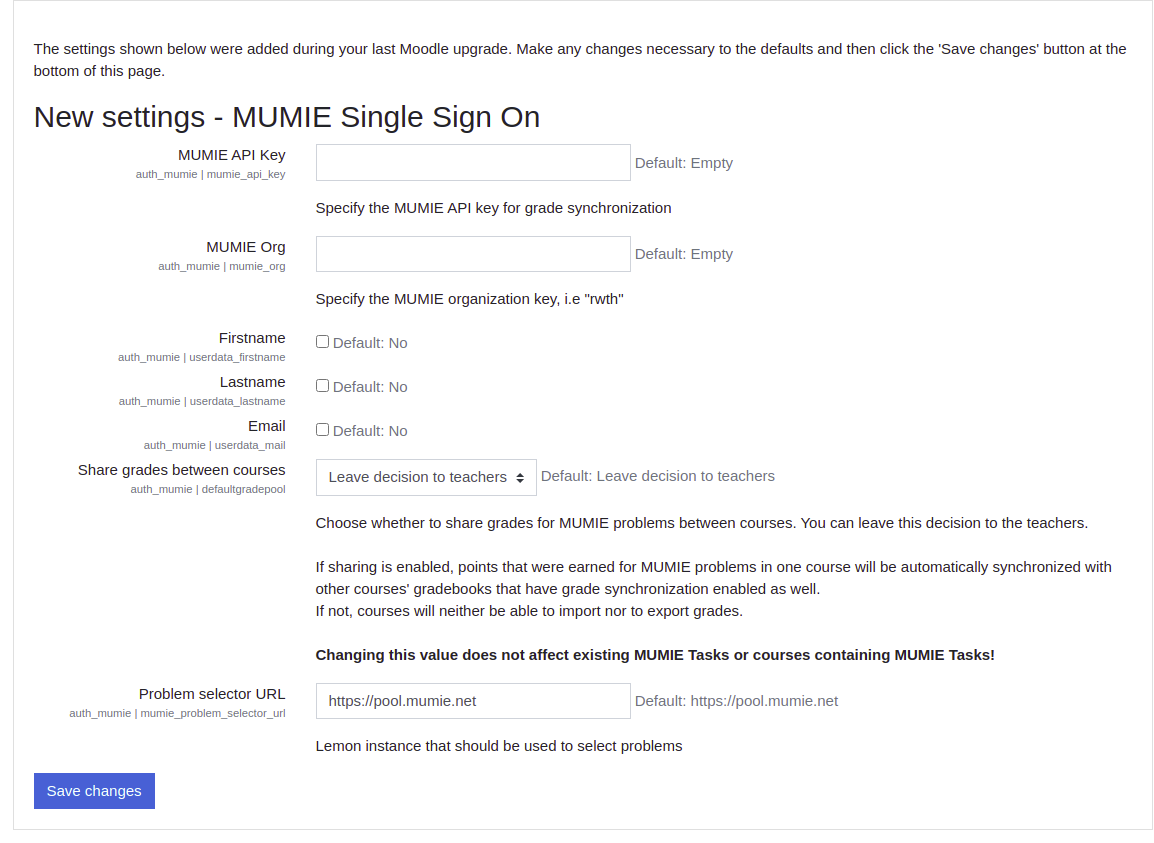
Enter your API key, your organization key and select, whether additional user data should be shared with the MUMIE server.
Then click on Save changes
If you don't know your API and organization keys, please get in touch with us. You can always enter or change them by going to the plugin settings page.
(ab Version 1.10.0) The option to share additional user data will be removed; only a pseudonymous user id will be transmitted for every user from then on. |
 |
| 5 |
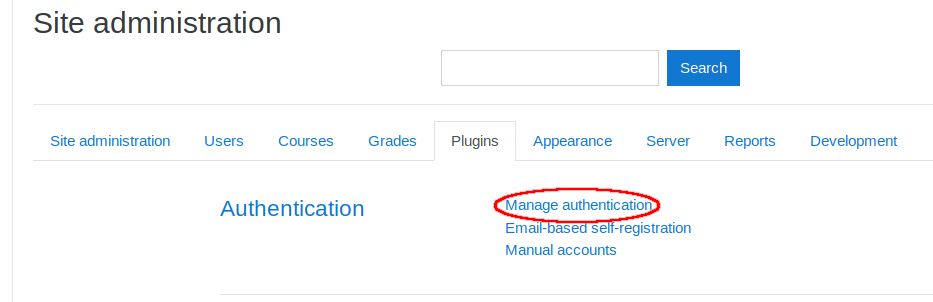
Go to Site administration, select the Plugins tab and click on Manage authentication in the Authentication section. |
 |
| 6 |
Enable MUMIE Single Sign On by clicking on the eye icon. |
 |
| 7 |
Return to plugin installer and install mod_mumie plugin |
Repeat steps 2 and 3 for MUMIE Task |
| 8 |
Optionally, choose a Default grade pool setting on the MUMIE Single Sign On settings page: let teachers freely choose whether a course shares its grades with other courses, or lock this choice platform-wide to either always-private or always-shared. |
|
| 9 |
Contact us via email and send us the URL of your Moodle server. You can also send us the IP address your server uses for outgoing HTTP requests to improve security further |
We need this information to configure our own servers |
Adding, editing and deleting MUMIE servers
Teachers can add new MUMIE servers themselves, but for security reasons, they cannot edit or delete them. If you want to do any of that, you need to follow these steps:
| Step |
Description |
Example |
| 1 |
Go to Site administration |
|
| 2 |
Select the Plugins tab and click on Plugins overview, then search the table for the auth_mumie entry and click on Settings |
 |
| 3 |
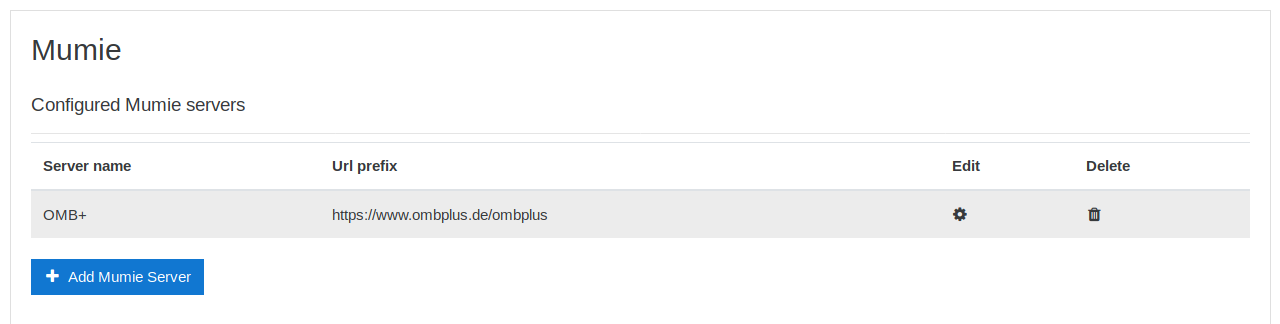
Select if you want to add, edit or delete a MUMIE server by clicking on the respective buttons |
 |
| 4 |
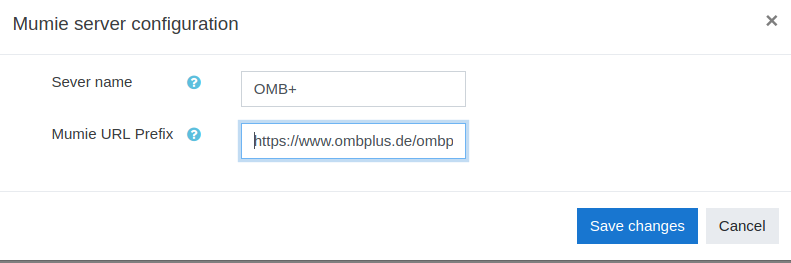
When adding or editing a MUMIE server configuration, keep in mind that both Server name and MUMIE URL Prefix must be unique |
 |
Important notice
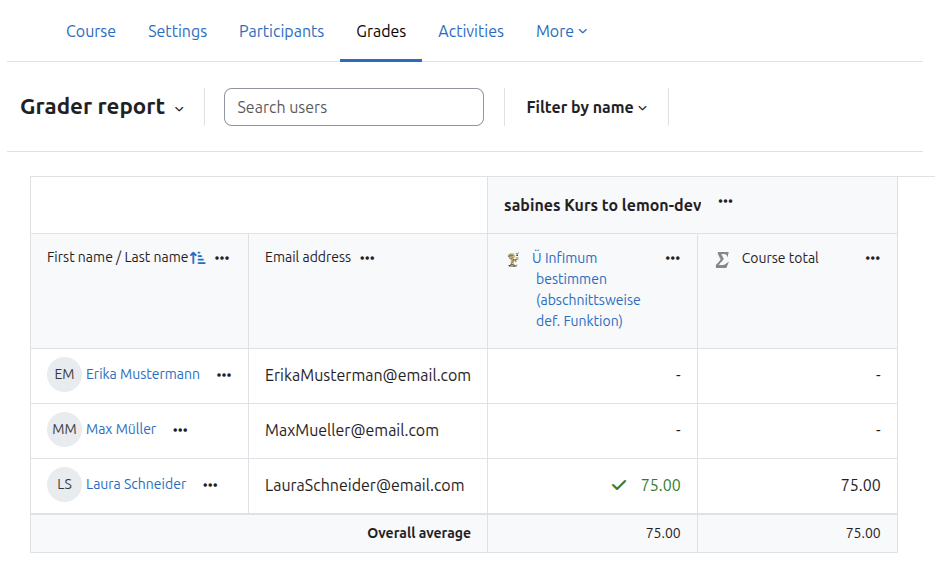
Currently, grades for the MUMIE Tasks are only updated when they are displayed in the Moodle gradebook (e.g. the course's grader report is viewed or the student opens his own gradebook). This means that we cannot guarantee that all grades are up-to-date, when they are accessed by other means than the one described above.
Course Activity Reports
Every time a student opens a MumieTask (activity) a log entry is created. These logs can be accessed as usual through the Moodle 'Course reports'.
FAQ
The FAQ on Moodle integration for adminstrators have been moved here